Two People, One Credible Phone Line: The Telecoms Kit That Actually Fits a Micro-Business

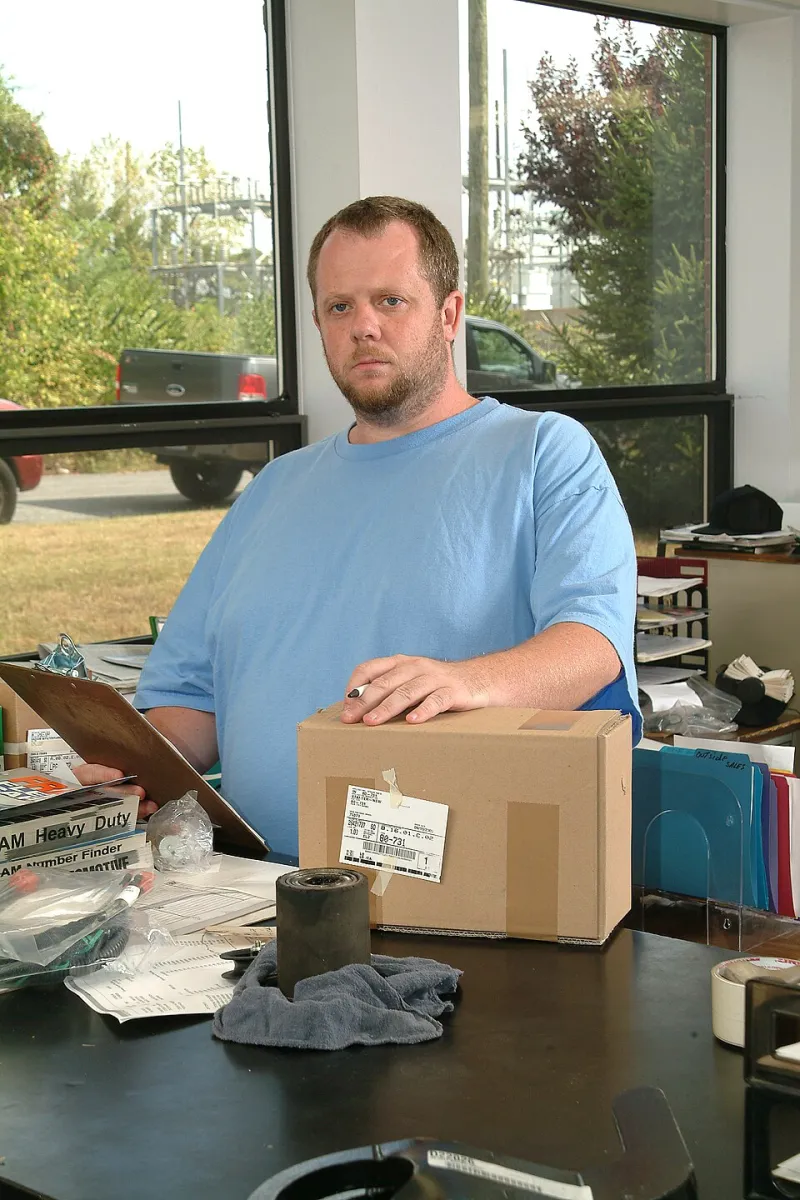
Photo: James Cahill, Public domain, via Wikimedia Commons
There is a certain kind of sales call that opens with "and how many seats are you planning to scale to?" and closes with a three-year contract for a company with two people in it. If you are a sole trader, a partnership, or a pair of founders sharing a desk, the truth is that you need about four things — and none of them is a platform.
This is the plain-English version: what a very small UK business genuinely needs in 2026, what it costs per month, and where to stop spending.
Begin at the number, not the technology
Most people go shopping for "a phone system" when what they actually want is a phone number that behaves properly. A landline-shaped number on a website and a Google listing signals a real business. A mobile number signals a person, which is lovely for a plumber and less lovely for a consultancy pitching to a finance director.
So the first decision is not VoIP versus landline. It is: which number do customers see, and where does it ring?
Two things worth knowing before you commit:
- Any number can be pointed almost anywhere these days. A number starting 0207 does not have to ring in London, and you do not have to live near the exchange.
- You almost certainly want to own the number, not rent it forever from whoever answers your calls. Ask, in writing, whether the number can be ported away if you leave.
The five pieces, priced honestly
1. A number you own (a virtual landline)
A hosted number with no desk phone attached typically runs £3–£8 a month plus call charges, or sits inside a VoIP plan. You get voicemail, a greeting, and often a call divert to a mobile. This is the cheapest route to looking established.
2. A VoIP seat or two
If you spend real hours on the phone and want extensions, call transfer, a decent softphone app and call recording, a hosted VoIP seat is roughly £8–£15 per user per month. Two seats, so £16–£30. That is the sensible ceiling for a team your size unless you are running a call centre out of the spare room.
3. Business mobiles or eSIMs
An eSIM-only business plan with a data allowance and a few hundred minutes is often £5–£15 a month on a SIM-only deal. A full business mobile contract with a handset pushes higher. If you already have a personal phone you like, an eSIM as a second line is the least fussy option — work calls arrive on a separate number, and you can silence it at 7pm.
4. Someone to answer when you cannot
A shared call-answering service, either a human receptionist or an automated attendant, is the piece micro-businesses most often skip and most often need. Expect £25–£60 a month for a small bundle of answered calls, more if you want a named person taking messages. For a two-person firm, even 20 answered calls a month can pay for itself with one recovered enquiry.
5. Connectivity you can actually rely on
Your hosted phone lives on your broadband. A business fibre package is typically £25–£45 a month; a 4G or 5G backup router, either as a second line or a dongle in a drawer, adds £10–£25. Do not skip this bit. The most common reason a small firm's calls fail is not the phone system, it is the router.
Add it up and a workable two-person stack lands somewhere between £60 and £130 a month, excluding handsets and call charges. That is the honest range.
The decision tree, kept short
Do you work from a fixed address most days? Yes → hosted VoIP on the office broadband, plus a number that diverts to mobiles out of hours. No → a virtual number that always diverts to mobiles, with a softphone app for when you want to look desk-bound.
Do customers ring you more than you ring them? Yes → spend the money on answering and voicemail quality, not on more seats. No → put the budget into a decent mobile plan and call recording instead.
Is your broadband under 20 Mbps down, or does it drop weekly? Yes → fix connectivity first. A beautiful cloud phone system on a shaky line is just an expensive way to hear silence.
Do you have a number with a previous provider? Yes → ask for the port date before you sign anything. Porting a single UK number is usually free to around £30 in admin, and takes one to two weeks if everyone cooperates. Do not cancel the old service until the port completes — that is how numbers get lost.
Things a two-person firm can safely ignore
Contact-centre features. Supervisor dashboards. Wallboards. A "unified communications strategy" in any formal sense. Multi-level IVR menus, which mostly teach callers to press zero. And any contract longer than 24 months, unless the price genuinely justifies it and the exit terms are readable.
One thing you should not ignore: 999 access and power-cut behaviour. Ask what happens to calls when the electricity goes off and whether the provider routes emergency calls from the app. It is a boring question with a satisfying answer.
The short version
Buy a number you can port. Put calls on a hosted seat or a divert. Get a mobile or eSIM for the second line. Fix the broadband before you fix the phones. Then, if the phone rings while you are up a ladder, pay someone to answer it.
That is the whole stack. It is not glamorous, but it will make a two-person outfit sound like a twenty-person one — which, for most micro-businesses, is exactly the point.